Paula Hammond - Features Editor
No one doubts the genius of Alfred Hitchcock, but it takes a book like Alfred Hitchcock Storyboards to remind us exactly why the iconic filmmaker was one of the most influential figures in the history of cinema. He may have fallen out of fashion recently, but watch any thriller, and you’re sure to see echoes of ‘the Master of Suspense’ at work.

Tony Lee Moral is a multi-award-winning mystery and suspense writer. He has written three books on the works of Alfred Hitchcock: The Making of Hitchcock’s The Birds, Hitchcock and the Making of Marnie and The Young Alfred Hitchcock’s Moviemaking Master Class. His latest book continues his exploration of Hitchcock’s work a one-of-a-kind volume.
Part historical document, part celebration of the artwork behind Hitchcock’s greatest films, this stunning coffee-table volume focuses on the storyboards for Hitchcock’s classic movies — including Vertigo, The Birds, Psycho, Spellbound, Marnie, Torn Curtain, The 39 Steps, and Shadow of a Doubt. The result is really something special.
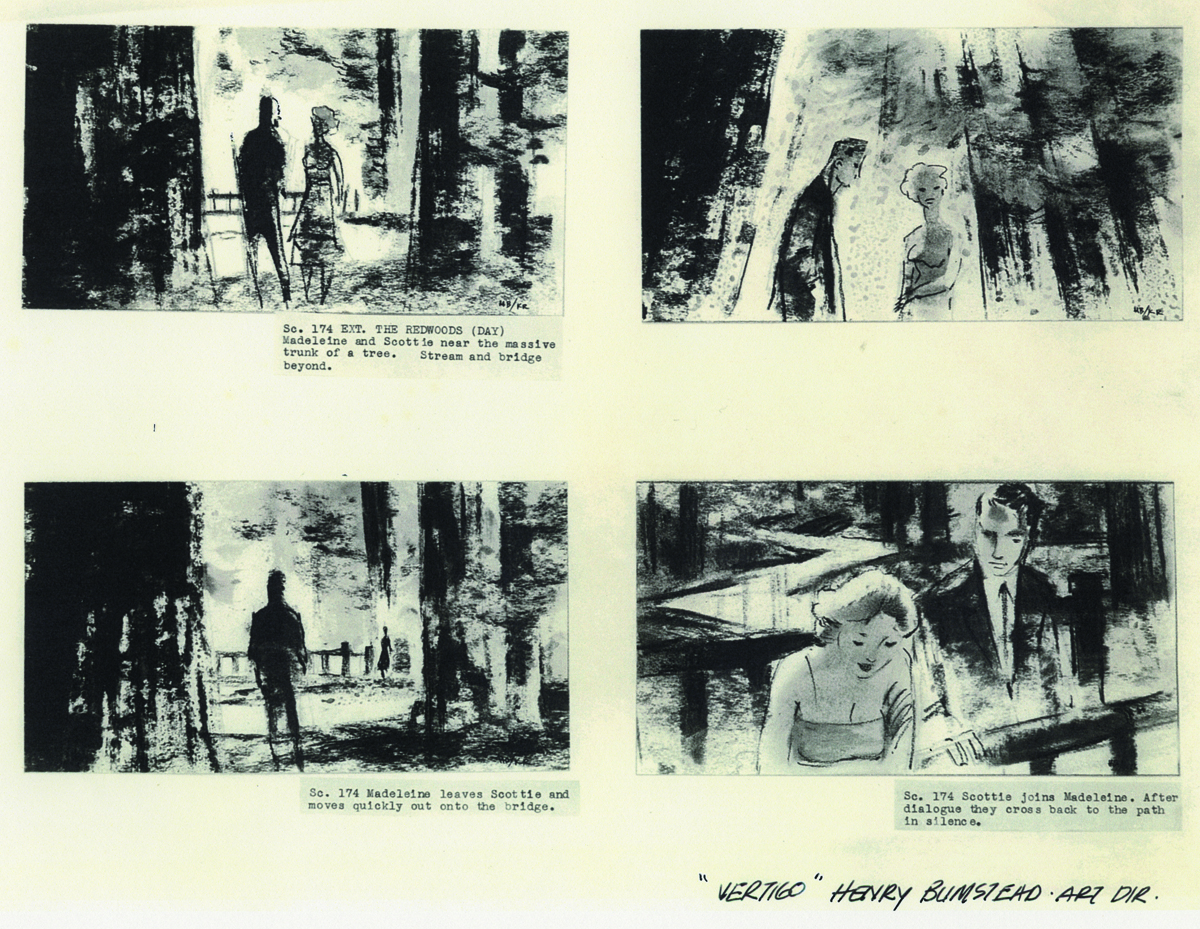
Over 144 full-colour pages, you’ll find never before-published images alongside incisive text that puts the material in the context of the role the storyboards played in some of cinema’s most unforgettable scenes.
The oversized format (26.24 x 1.75 x 33.02 cm) means that every artwork can not only be appreciated, but examined in a way that few film books allow.

Alfred Hitchcock Storyboards is an absolute joy, allowing fans and film buffs to truly appreciate Hitchcock’s meticulous planning and mastery of the visual arts.
Alfred Hitchcock Storyboards (ISBN 9781789099546) is out now from Titan, priced £34.99/ $50.00 in hardback.
Alfred Hitchcock Storyboard images:
Ben and Jo McKenna’s hotel suite in Marrakech where a strange man asks for Monsieur Montgomery, The Man Who Knew Too Much (1956). Credit: Alfred Hitchcock Estate, Margaret Herrick Library, Academy of Motion Picture Arts and Sciences, Bob Bumstead.
Scottie Ferguson takes Madeleine to Muir to the woods where they wander among the tall redwoods, Vertigo (1958). Credit: Alfred Hitchcock Estate, Henry Bumstead Papers, Margaret Herrick Library, Academy of Motion Picture Arts and Sciences, Bob Bumstead,